
Jade Mahjong
Wonderful StudioBoard
4.92.04K Reviews
- Version
- 1.5.2
- Installs
- 5.00M
- Age Rating
- Everyone
Screenshots
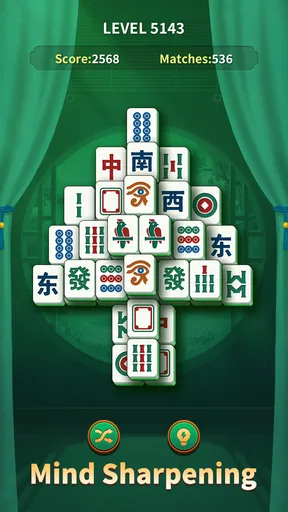
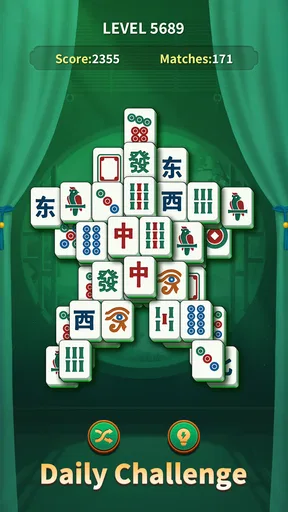
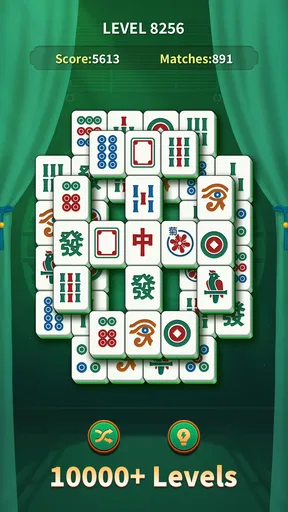
Our Review of Jade Mahjong
 Analysis by Appyee
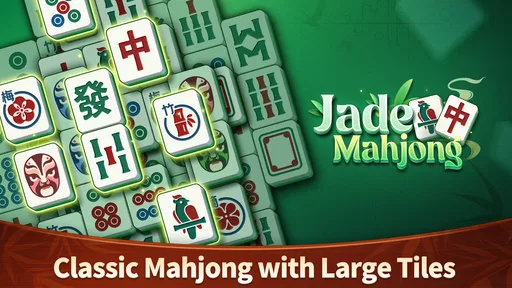
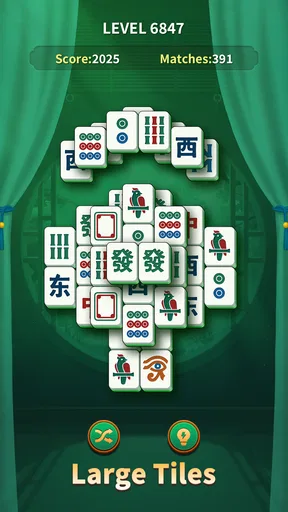
I usually reach for a tile-matching game when I want something calmer than a timed arcade challenge but more engaging than simply scrolling on my phone. Jade Mahjong is aimed at that kind of break: a board game built around pairing tiles, with a visual style that feels gentle rather than busy. Its large tiles and senior-friendly design are especially relevant if small, crowded boards make other puzzle games tiring to use.
The appeal is easy to understand, but the right expectations matter. This is a focused Mahjong-style matching game, not a broad collection of board games or a social competition platform. I’d consider it for a quiet pause, a bit of visual problem-solving, or a familiar routine at home. If you want elaborate progression systems, constant novelty, or intense multiplayer play, a different kind of game will probably suit you better.
What the free download means in practice
The game is free, so there is no purchase price to weigh before trying it. That makes the decision straightforward for someone curious about tile matching: download it, see whether the board and pace suit you, and decide from your own experience. I would not confuse free access with a promise about every possible in-game cost or offer; the useful confirmed point is that getting the game does not require an upfront payment.
That distinction matters when comparing it with paid puzzle apps. A one-time purchase can be attractive if you want a clearly priced, self-contained game, while a free download lowers the barrier to testing something new. Here, I’d judge the value by whether the core matching experience earns a place in your regular downtime, rather than by assuming anything about optional purchases or advertising.
Value comes from a comfortable, low-pressure puzzle
Mahjong matching is simple to start but can reward careful attention: you scan the visible tiles, choose a pair, and try to leave yourself useful options for later. The large-tile approach makes that visual search more approachable, especially during a short session when I don’t want to squint at a dense board. It also makes the game a plausible choice for older players or anyone who prefers clear, easy-to-see pieces.
Offline play is another practical advantage. I can treat it as a game for a commute, a waiting room, or a place where a reliable connection is not available, rather than something that depends on being online to fill a spare moment. For a calmer puzzle, that independence is useful: the activity stays self-contained and does not ask me to turn a quiet break into a social event.
Where the trade-offs show up
A matching game can become repetitive if its basic loop is not what you enjoy. The pleasure comes from reading the board and making choices, not from a story, changing action mechanics, or a large range of unrelated activities. If I wanted a game that continually teaches new systems or keeps me reacting quickly, this would not be my first pick.
Large tiles improve legibility, but they do not remove the need to look carefully at the board. Similar-looking symbols can still demand attention, and a tricky layout may take patience rather than a quick tap-through. I’d play with the screen at a comfortable distance and avoid rushing: taking a moment to scan the available pairs can be more satisfying than tapping the first match I notice.
There is also a useful trade-off in choosing an offline-friendly puzzle over a competitive one. You get a game that can fit into solitary downtime, but players who want live opponents, rankings, or a strong social layer should look elsewhere. I would not pick it as a substitute for a full traditional Mahjong session with other people; the matching format offers a different, more individual kind of play.
A realistic way to fit it into the day
Imagine waiting for an appointment with ten quiet minutes to spare. A large, readable tile board is easier to settle into than a fast game that punishes interruptions, and offline access means the puzzle can still be available when the connection is poor. I’d use that time to work through a board at my own pace, stopping when I’m called rather than feeling obliged to keep up with a match or a countdown.
At home, it could also make a gentle shared activity for a relative who enjoys puzzles but finds tiny mobile controls frustrating. The useful approach is to let the player choose the pace and handle the board themselves, offering a suggestion only if they ask. That keeps the puzzle engaging instead of turning the session into someone else solving it for them.
Small habits that make the puzzle more enjoyable
One practical habit is to scan the whole visible board before choosing a pair. That short pause helps me notice which matches may open up more choices and which move could leave a crowded area harder to read. It is not about finding a perfect strategy every time; it simply makes the game feel more deliberate than tapping whichever identical tiles catch my eye first.
If I get stuck, I treat a hint as a nudge rather than an automatic next move. Using help after I have checked the board myself keeps the puzzle from becoming a sequence of prompts, while still giving me a way past a moment when I cannot see a match. For a relaxed session, that balance is better than either refusing help entirely or relying on it before trying.
I’d also match the game to the kind of break I actually have. A short wait suits one focused board; a longer, uninterrupted stretch is better if I want to settle in without repeatedly putting the phone down. Since this is a quiet matching activity, it works best when I’m in the mood to pay attention, not when I need a game that can be played on autopilot while my attention is elsewhere.
How it compares with other board and puzzle games
Compared with fast match games, the appeal here is patience rather than speed. There is no need to chase rapid reactions to enjoy the core task, which makes it a better fit for winding down than for someone seeking a burst of adrenaline. Compared with digital versions of traditional Mahjong, it is better understood as a solo tile-clearing puzzle, not as a replacement for learning or playing the full tabletop game with its distinct rules and social rhythm.
Against other mobile board games, its focus is both its strength and its limit. A broad board-game collection offers more variety when several people want to play together, while a single-purpose matching game is easier to pick up when I want one clear activity. I’d choose this when I want a quiet visual challenge; I’d choose a multiplayer board game for shared turns, or a more varied puzzle app if I knew I would tire of repeating one central format.
Who is likely to get the most from it
I can see it working well for people who already enjoy Mahjong-style matching, players who prefer large, legible pieces, and anyone looking for a calm game that does not depend on an internet connection. It may also suit a beginner who wants to learn by looking for pairs at their own speed. The senior-friendly design is a practical consideration, not a claim that the game is only for older adults: readability benefits many players.
I’d skip it if I were shopping for a deep strategy game, a lively group activity, or a puzzle with a constantly changing set of mechanics. It is also not the best match for someone who dislikes visual searching or finds repeated tile layouts dull. That is a matter of taste rather than a flaw that can be fixed by playing longer; a different genre would offer better value for that player.
Who makes it, and how established it is
Wonderful Studio is the developer behind this board game. It was released on September 25, 2025, and the current version is 1.1.7; Android support begins at version 6.0. Those details can help someone check basic compatibility before downloading, particularly if they use an older device.
The game has a 4.9 average from around 60,000 ratings, with about 764 written reviews and over one million installs. Those figures suggest that many people have tried it and that ratings are strongly positive, but I would treat them as context rather than a guarantee that every player will enjoy the same pace. The age rating is Everyone, which fits a straightforward board-game experience and makes it easier to consider for a wide range of households.
A practical verdict on value
For me, the strongest case for Jade Mahjong is the combination of a no-cost download, readable tiles, and offline play in a focused puzzle format. It offers a low-commitment way to find out whether this style of matching suits you. The value is most convincing if you will actually use it for calm, independent sessions, rather than expecting a large catalogue of modes or a social game.
Before downloading, I’d ask myself one simple question: do I enjoy studying a board and making measured matches? If yes, this looks like a sensible free option to try. If I want fast action, varied genres, or a full multiplayer Mahjong experience, I’d put my time into a different game instead.
Ever found yourself in need of a good brain teaser that also happens to be soothing? Let me introduce you to Jade Mahjong, an app that combines the classic game of Mahjong with a serene aesthetic that’s perfect for unwinding.
The Gameplay Experience
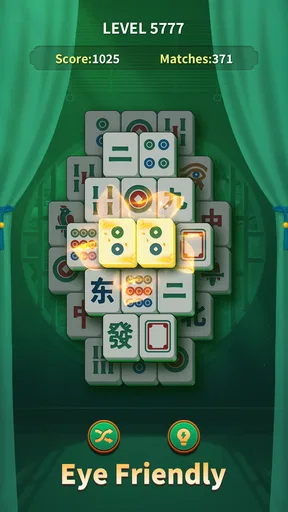
When I first opened Jade Mahjong, I was greeted by an elegant and minimalistic interface. The jade-themed tiles are not just eye candy; they bring a calming vibe that makes you want to play for hours. The game stays true to the traditional Mahjong setup, where your main objective is to match pairs of tiles to clear the board. Sounds simple, right? But as you dive deeper into the game, you'll quickly realize it's anything but!
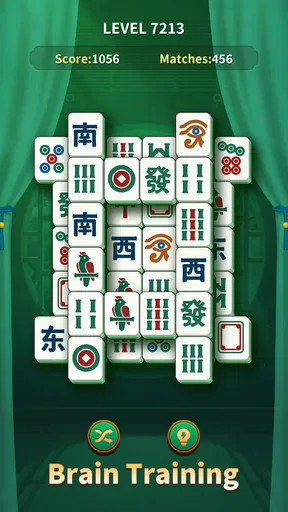
One of the things I really appreciated was the variety of layouts available. Whether you're a newbie or a Mahjong master, there's something to challenge you. The app also includes a handy hint system for when you’re stuck, but don’t rely on it too much, or you’ll miss out on the fun of solving the puzzles yourself.
Features That Stand Out
Aside from the stunning jade visuals, the sound design deserves a mention. The gentle background music and the satisfying clicks of the tiles make the experience even more immersive. You can easily lose track of time while you’re playing, which, let’s be honest, is exactly what we want from a game like this.
Another cool feature is the daily challenges. These are perfect for those who enjoy a little competition or just want to test their skills against players worldwide. Plus, completing these challenges adds to the replayability factor, keeping the game fresh and exciting.
My Final Thoughts
So, is Jade Mahjong worth the download? Absolutely. Whether you’re a Mahjong enthusiast or just looking for a new puzzle game to pass the time, this app has a lot to offer. Its beautiful design, smooth gameplay, and variety of challenges make it a standout in the sea of puzzle games available on the app stores.
Just a heads up, though: make sure you have a good amount of free time before you start playing. Once you’re in, it’s hard to stop. And trust me, you’ll be finding matches in your sleep!
Verdict
Strengths of Jade Mahjong
- Intuitive interface for easy navigation.
- Variety of tile designs to choose from.
- Relaxing background music enhances focus.
- Offers daily challenges to keep you engaged.
- Supports offline mode for uninterrupted play.
Limitations of Jade Mahjong
- Limited hints can be frustrating for beginners.
- Ads can be intrusive during gameplay.
- Requires frequent updates for new features.
- In-app purchases can be costly over time.
- Lacks multiplayer option for competitive play.
Other Releases by Wonderful Studio
View All
Block Crush!
Puzzle4.6
Similar Picks in This Category
View All
Ludo King®
Gametion4.1

Ludo
Yarsa Games4.6

Tile Master® - Matching Game
Higgs Studio3.6

Checkers Online
CC Games4.6

Dominoes
Loop Games4.7

Chess
Chess Prince4.6
Frequently Asked Questions
What is Jade Mahjong and how does it differ from traditional Mahjong?
Jade Mahjong is a modern adaptation of the classic Mahjong game, available on Android and iOS platforms. Unlike traditional Mahjong, which is played with four players, Jade Mahjong offers a single-player experience with beautifully crafted digital tiles and boards. The game includes various challenging levels and themes that enhance the overall experience.
What are the device requirements for installing Jade Mahjong?
To install Jade Mahjong, your device must meet certain requirements. For Android users, a minimum of Android version 5.0 is necessary, while iOS users need at least iOS 11. Additionally, the game requires at least 150 MB of free storage space and a stable internet connection for optimal performance.
Is Jade Mahjong free to play, and are there any in-app purchases?
Jade Mahjong is free to download and play, offering a variety of levels and challenges at no cost. However, the game does include optional in-app purchases. These purchases can enhance your gaming experience by unlocking additional themes, levels, or special features, but they are not necessary to enjoy the core gameplay.
Does Jade Mahjong offer any multiplayer features?
Jade Mahjong is primarily a single-player game, focusing on providing a personal and immersive experience. However, it does feature online leaderboards where players can compete against each other by comparing scores. This adds a competitive edge without requiring real-time multiplayer gameplay.
How can I resolve any issues or bugs I encounter with Jade Mahjong?
If you experience any issues or bugs while playing Jade Mahjong, the first step is to ensure your app is up-to-date. Check for updates in the Google Play Store or App Store. If problems persist, you can contact the developer's support team through the app or their official website for assistance. They typically respond promptly to user concerns.
Play our best games!


